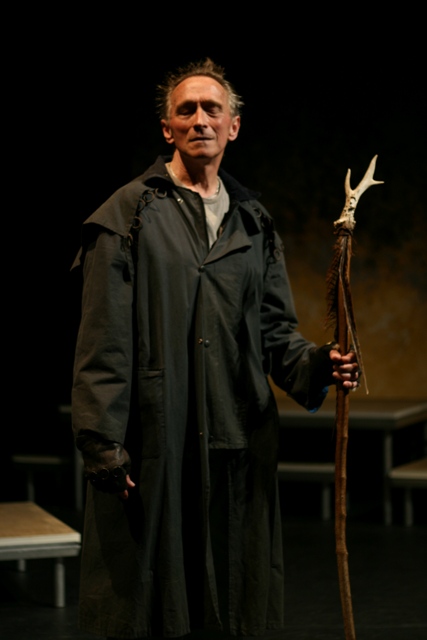
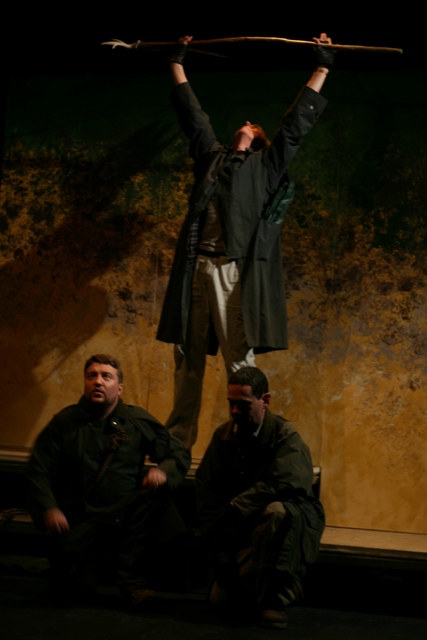
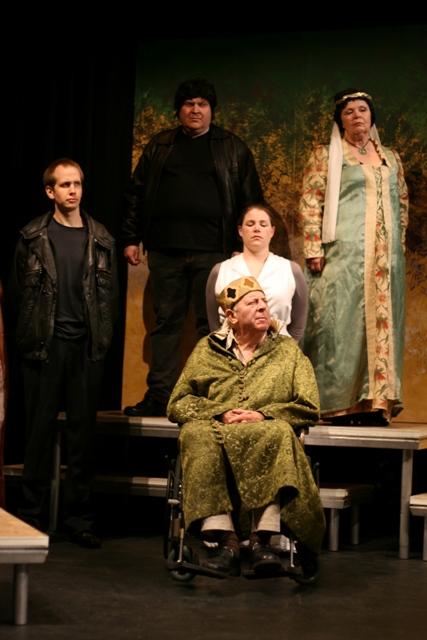
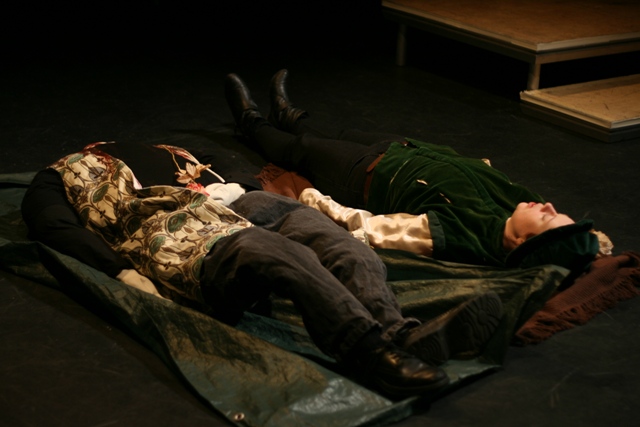
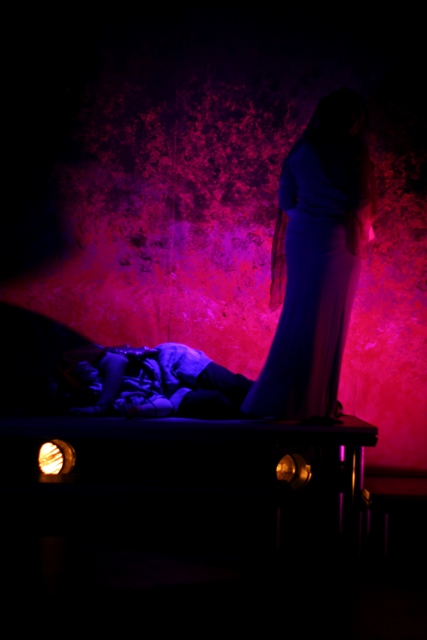
The Bench Production

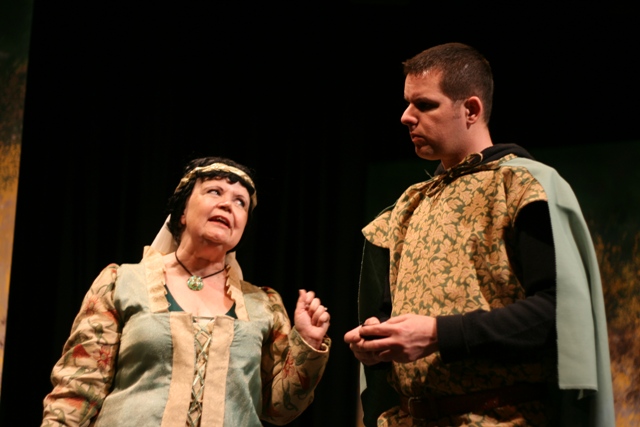
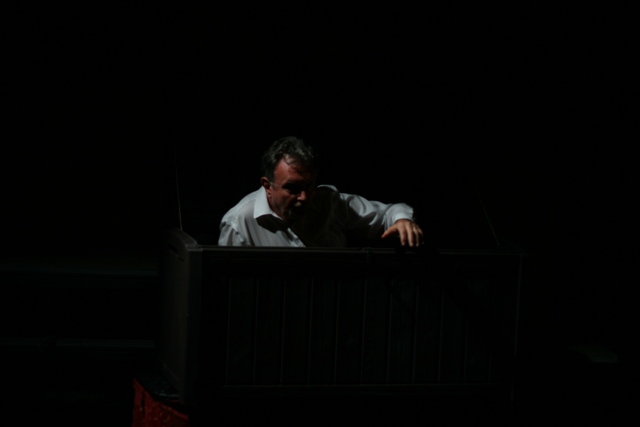
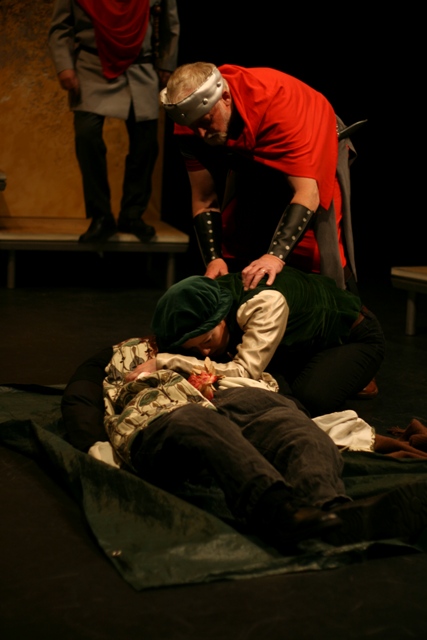
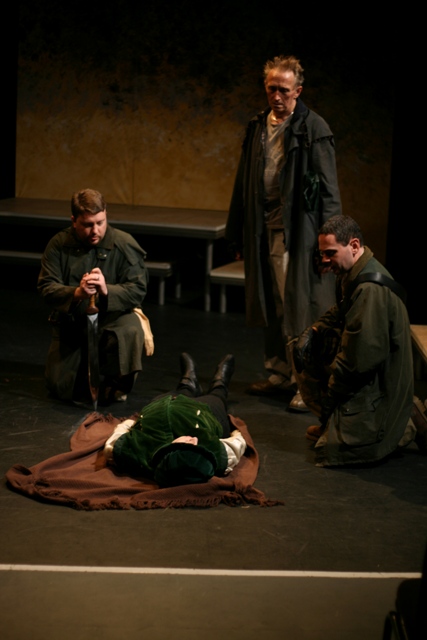
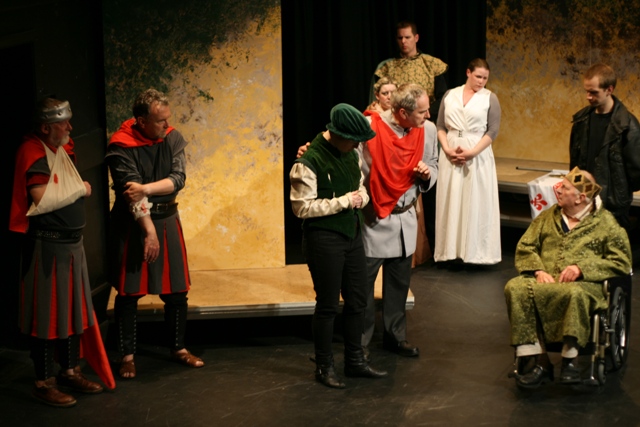
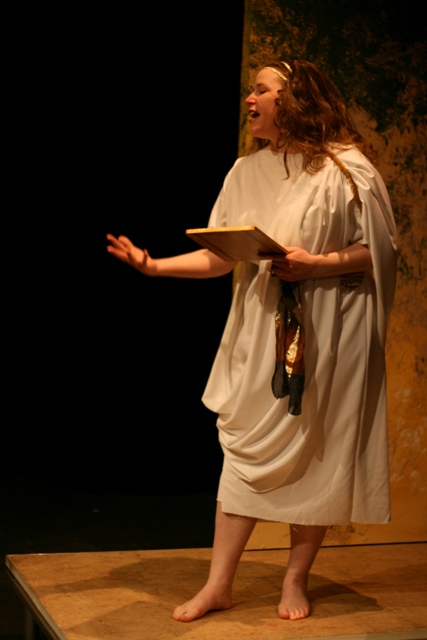
This play was staged at The Spring Arts and Heritage Centre (formerly Havant Arts Centre), East Street Havant - Bench Theatre's home since 1977. It was produced in conjunction with The Royal Shakespeare Company as part of their Open Stages initiative.
Cast
| First Gentleman Frenchman First Captain (British) | Thomas Hall |
| Second Gentleman Caius Lucius Second Captain(British) | Roger Wallsgrove |
| Posthumus Leonatus | Jeff Bone |
| Cloten | Mark Wakeman |
| Cymbeline | John Batstone |
| Jupiter (recorded voice) | Jaspar Utley |
| Pisanio | Richard Le Moignan |
| Cornelius (Doctor) Belario | Terry Smyth |
| Iachimo | David Penrose |
| Roman Captain | Maurice Lillie |
| Guiderius | Greg Stone |
| Arviragus | Paul Millington |
| Attendant Soothsayer | Claire Lyne |
| Imogen | Alice Corrigan |
| Queen | Ingrid Corrigan |
| Lady Helen | Lorraine Galliers |
Crew
| Director | Diana Wallsgrove |
| Producer | Ingrid Corrigan |
| Stage Manager | Jacquie Penrose |
| Assistant Stage Manager | Maurice Lillie |
| Lighting Design | Phil Hanley |
| Lighting Operation | Robin Hall |
| Sound Operation | Sharon Morris |
| Costume Design | Sue Dawes |
| Costume Assistants | Jen Jones, Judith Smyth, Robin Hall |
| Set Design | David Penrose |
| Photography | Dan Finch, Julie Wood |
| Front of House Manager | Ingrid Corrigan |
Lambs' version of Cymbeline
Cymbeline is a fairy tale, in essence, with wicked stepmother, lost princes and a feisty princess at its heart (plus Roman soldiers, and one or two other oddities). This Lambs' Tales from Shakespeare version makes for an easy way of reading the story.
The Changing Theatricality of Cymbeline, a dissertation in 4 parts By Diana Wallsgrove
- Chapter 1 - Introduction & Renaissance
- Chapter 2 - Adaptation
- Chapter 3 - Portrait of a Lady
- Conclusion - Changing Theatricality
The copyright for this dissertation remains at all times with the author, Diana Wallsgrove. The text within it may not be re-produced in any form, in whole or in part, without her express permission.
Director's Notes
Authenticity was not a concept that existed in Shakespeare's theatre. Thus, in The Winter's Tale, Bohemia has a sea coast, although it had none, and the clocks strike in Rome during Julius Caesar although such things were not yet invented. What Shakespeare is at pains to establish is that we are not here - i.e. not in Elizabethan or Jacobean London. Perhaps Shakespeare needs to do this so that what is written cannot be considered treason. Unlike many of his contemporaries, Shakespeare does not seem to have spent time in the Tower due to having upset the reigning monarch, so it obviously worked!
Cymbeline doesn't seem to know whether it is "tragedy, comedy, history, pastoral, pastoral-comical, historical-pastoral, tragical-historical, or (and most probably) tragical-comical-historical-pastoral" to quote from Hamlet. Shakespeare's play is (very loosely) based on a King of Britain ruling in the first century AD, whom he may have read about in accounts by Suetonius. Much more to the point, this is a tale of 'once upon a time there was a king with three children...' Above all, Cymbeline is a fairy tale and, that being the case, authenticity has nothing to do with it!
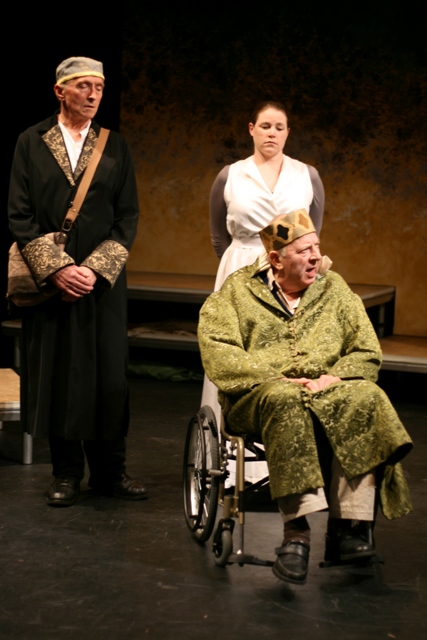
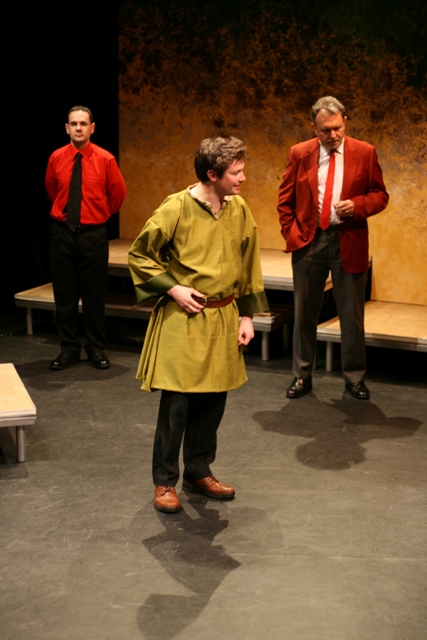
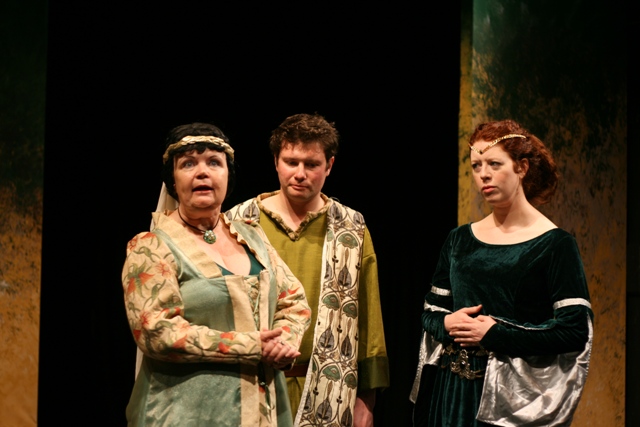
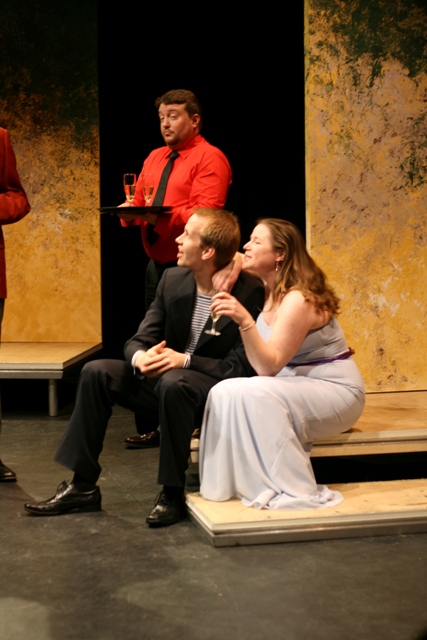
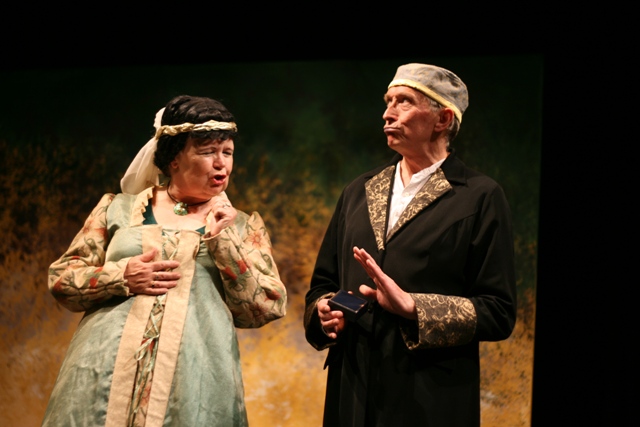
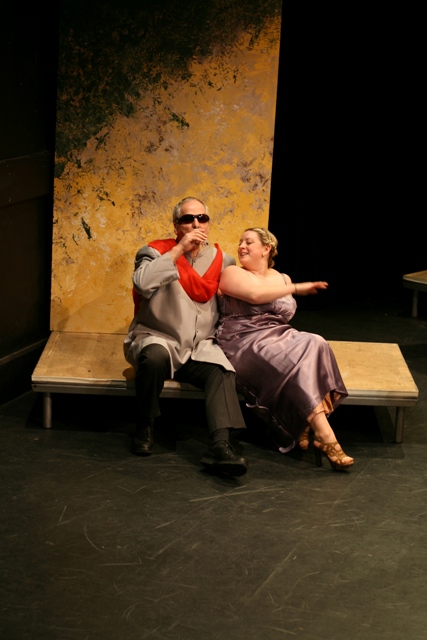
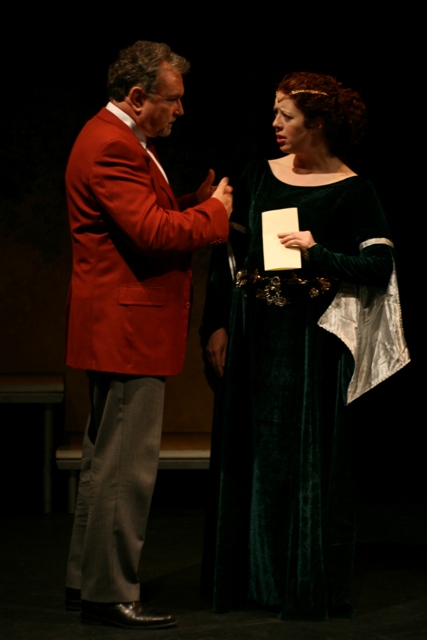
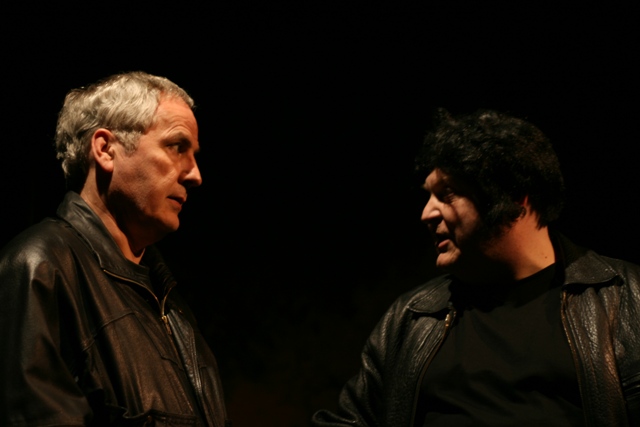
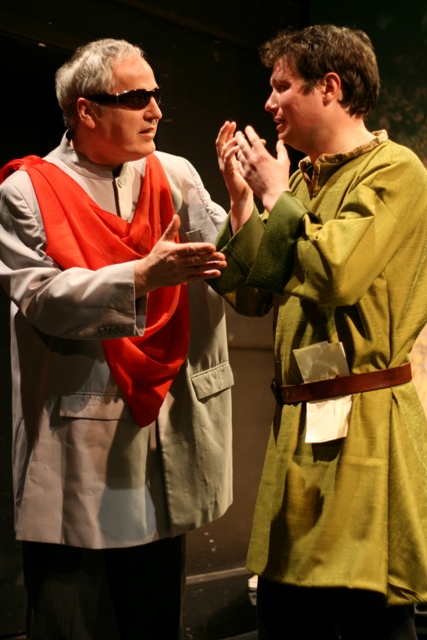
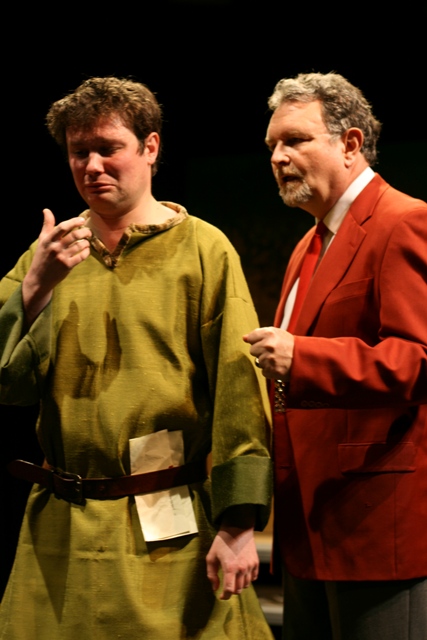
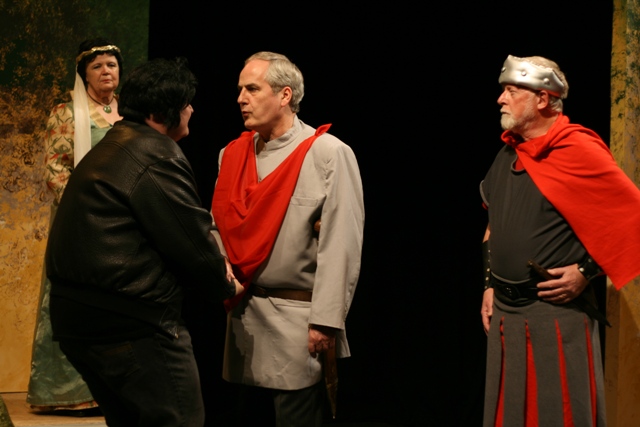
Near the beginning, Posthumus Leonatus is banished from Britain. He goes to Italy and there meets one Signor Iachimo. It seems clear that he has not gone from Ancient Britain to Classical Rome - but to (for Shakespeare) 'modern' Italy. Later we meet the apparently eco friendly 'Welsh mountaineers'. Near the end, under the leadership of the Ambassador, Caius Lucius, there is a Roman invasion - and this time Shakespeare seems to really think of them as Romans, not Italians - so we have too! Thus our seemingly anachronistic mix of costumes reflects Shakespeare's inexactness about time and place. The clever clogs amongst you might be wondering why Albania and Dorset seem to be represented in our battle flags - sorry - we liked the images and again chose effect ahead of the authentic.
This play was certainly performed during 1610 (there's a written account of it). That year saw the investiture of James I's son Henry as Prince of Wales. This may perhaps account for everyone going off to Wales in the second half of the play and extolling the virtues of Milford Haven (yes, seriously - though that was before it had an oil terminal!). We've done our best to embrace the fairy tale spirit of this play. It was hugely popular during the eighteenth century but although it was performed in the Victorian age, I don't think they liked its mad mix of ingredients. As the only really star vehicle is Imogen, in the age of grand actor-managers, it really didn't suit.
I hope that you will, like me, laugh, cry and be amazed by Cymbeline - and wonder why it isn't performed much more frequently.
An extract from Cymbeline directed by Di Wallsgrove, was performed at The Nuffield Theatre on June 13th as part of the Open Stages event. Here are Di's thoughts on the event. "It was well over a year ago now that The Bench decided to take part and some of us attended Directors' and Actors' workshops. It was an interesting challenge to adapt part of our original production, designed to occupy The Spring's small stage, to the vast space and very different feel of the Nuffield. Not only that but three cast members (Richard, Terry and Claire) were bravely playing new roles within our twenty minute extract. We concluded the evening's entertainment.
Our piece stood up very well in comparison to the other companies performing, providing the wonderful 'Cymbeline' blend of drama, emotion and comedy. It was warmly received by the small but appreciative audience. It would have been lovely to see more Benchies there, but perhaps the day was more about actors having fun in a professional theatre rather than entertaining an audience..."
Diana Wallsgrove
Reviews
The NewsJames George
Cymbeline at the Spring
In her programme notes director Di Wallsgrove muses over the reason behind Cymbeline's infrequent performance.
Coming to it for the first time myself on The Bench's opening night, I'm inclined to agree.
Shakespeare's text takes time to get going, but when it does it's beautiful. That said, Wallsgrove's production has an uneven texture.
Performances are generally good but the verse only seems to truly take flight in Terry Smyth's mouth - interestingly when given the earthy leg-up of a Welsh accent. Smyth's whole performance is well-judged. David Penrose - always a master of verse - gives a lovely subtle underplaying to Iachimo, the baddy of the piece.
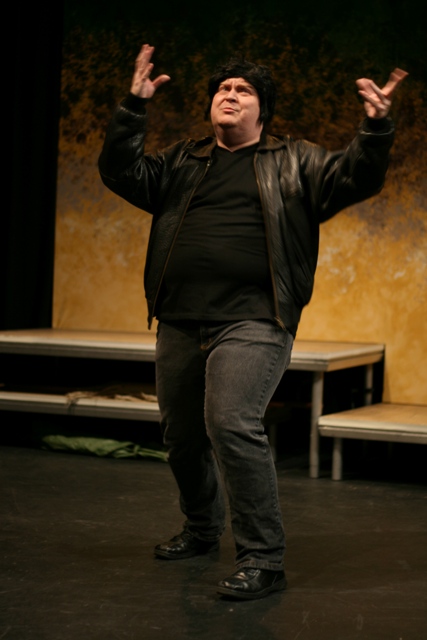
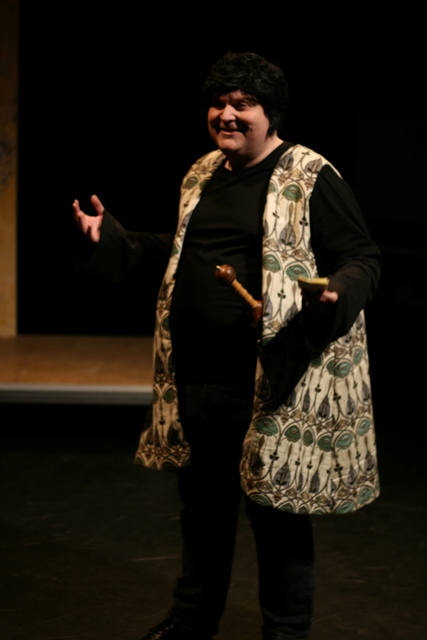
Alice Corrigan makes Imogen - one of Shakespeare's less-interesting heroines - feisty and fun and Mark Wakeman's Cloten is a real comedic firework. I'm not entirely convinced his performance sits comfortably in the show as a whole - but the opening-night audience loved it. However, Jeff Bone, as hero Posthumous, needs to find a bit more variety, a few more angles, to be truly convincing.
Apart from some desperately poorly-conceived fight scenes, the direction, played against Penrose's beautiful set, works well.
The show's a must-see because who knows when you'll get another chance?
Review
James George The News 20th April 2012
The Daily EchoEd Howson
Cymbeline, Bench Theatre at the Spring
With a wronged princess, a wicked stepmother, long-lost sons, an oafish step-brother, and a devious Italian, this rarely-performed play had all the ingredients of a pantomime instead of the romantic tragi-comedy Shakespeare wrote.
And perhaps it should have been presented as such, as the many different periods used to stage and costume Diana Wallsgrove's uneven production did not sit well together. But the storyline held together sufficiently and the play itself perhaps deserves to be seen more often, though varying delivery of the verse and a pitifully poor battle scene let the evening down badly.
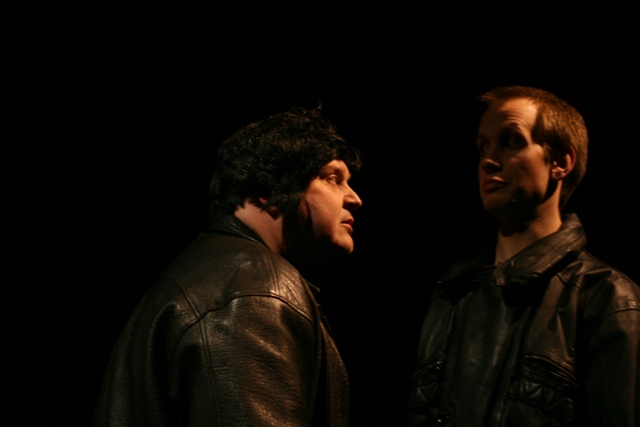
Mark Wakeman's Elvis-wigged Cloten was a self-deluding delight and had the audience chortling, while Terry Smyth's Welsh-twanged Belarius was fresh and confident. Alice Corrigan, as Imogen, the wronged princess, could have been a bit more gutsy, while David Penrose's scheming, and ultimately penitent, Iachimo was a joy to listen to.
Review
Ed Howson The Daily Echo 24th April 2012